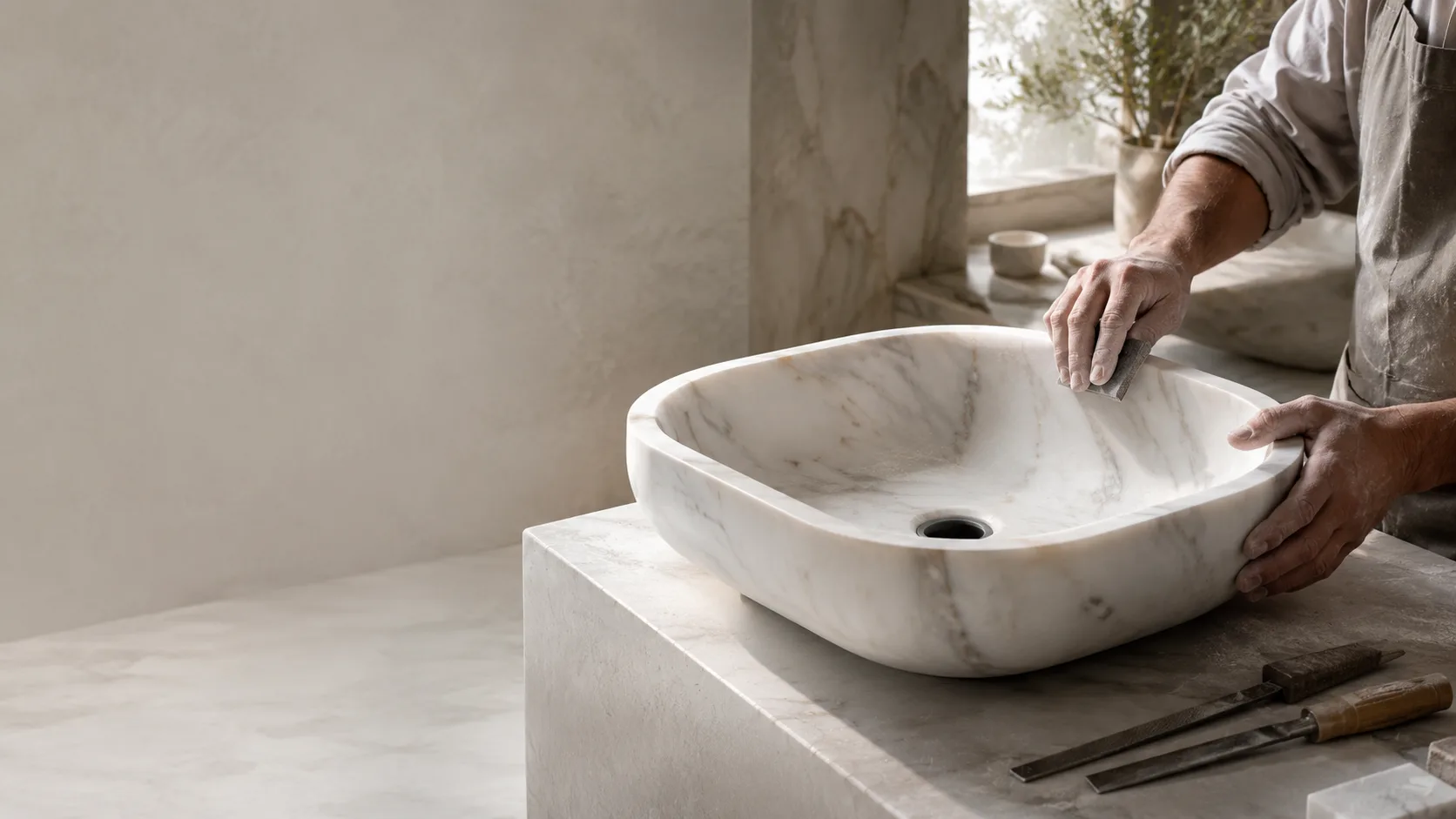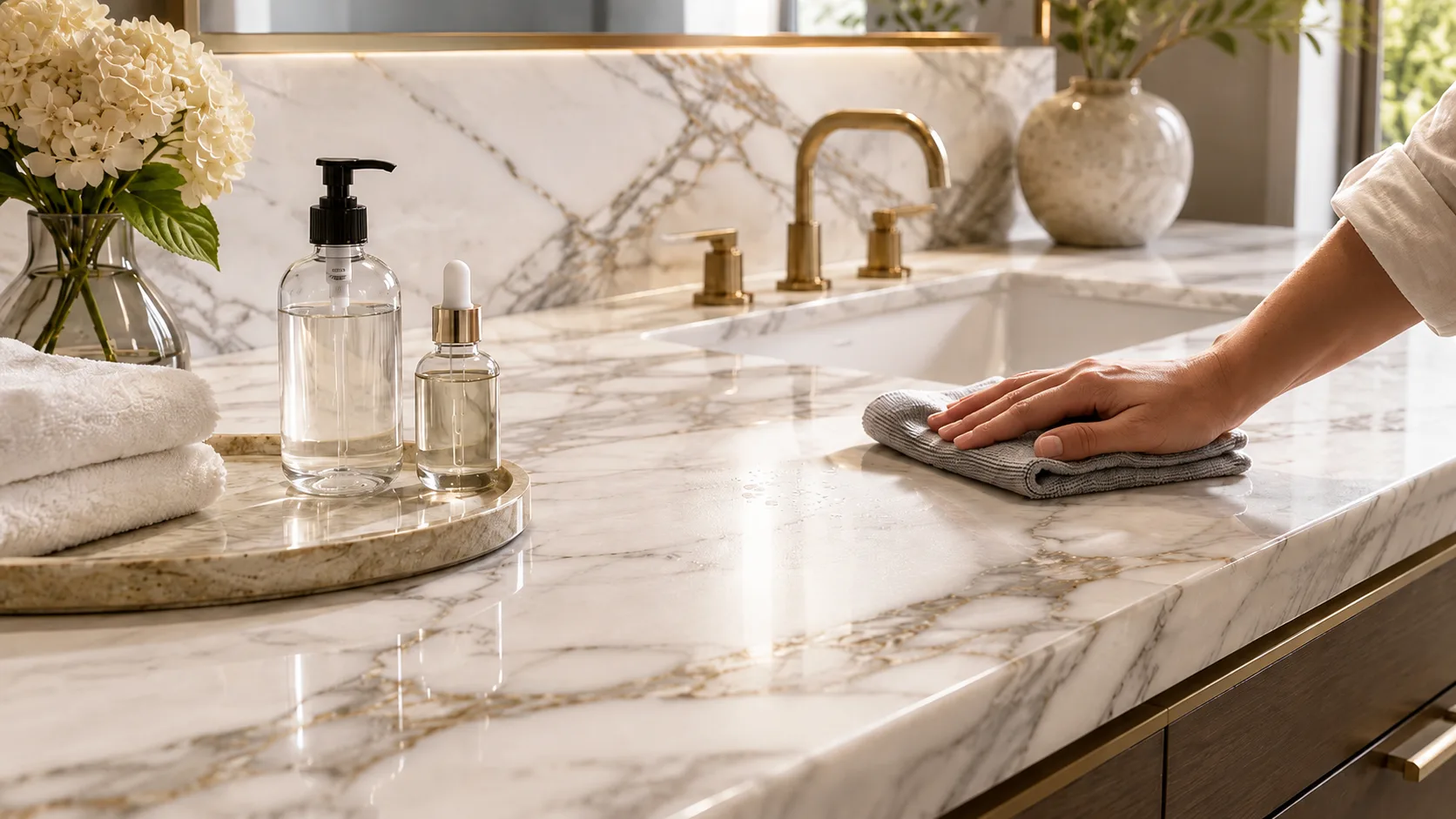
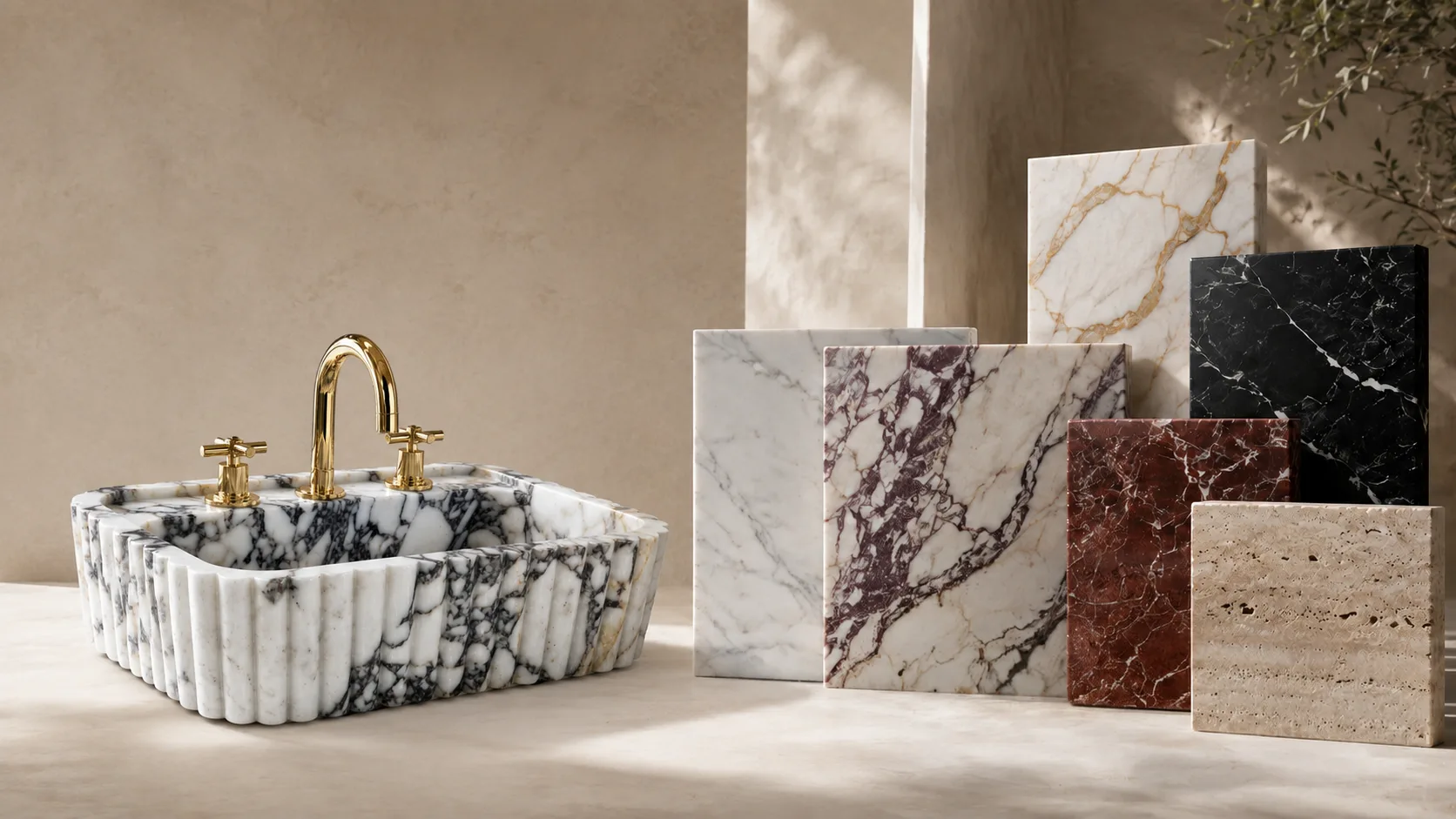
Compare Carrara White, Calacatta Viola, Calacatta Gold, Nero Marquina, Rosso Levanto and travertine by color, veining, design character and ideal applications.
A Complete Guide to Marble and Natural Stone: Which Stone Is Right for Your Design?
Choosing natural stone involves much more than deciding between white, black or beige.
Every stone has its own visual language.
The quiet gray movement of Carrara White creates a completely different interior from the expressive burgundy veining of Calacatta Viola.
Nero Marquina introduces dramatic black-and-white contrast, while Rosso Levanto creates richness through deep red and wine-colored tones.
Travertine offers something different again: a warmer, more tactile and architectural natural-stone expression.
For this reason, choosing marble is not simply a material decision.
It is one of the decisions that defines the character of the entire design.
In this guide, we compare six distinctive natural stones that can be used across Marble Vertex collections and custom projects:
- Carrara White
- Calacatta Viola
- Calacatta Gold
- Nero Marquina
- Rosso Levanto
- Travertine
What Should You Consider When Choosing Natural Stone?
Natural stone should never be approached in the same way as a manufactured, perfectly uniform surface.
Every block is different.
Even within the same commercial stone variety, the intensity of the veining, background color and mineral movement can vary.
When selecting a natural stone, several factors should therefore be considered together.
Color
How will the stone interact with the overall palette of the interior?
Veining
Do you want subtle movement or dramatic contrast?
Visual impact
Should the stone remain quiet within the architecture, or become the focal point?
Application
Will it become a bathroom sink, table, bathtub, fireplace or sculptural architectural element?
Scale
How will the veining appear when transferred from a slab or block onto the final object?
Finish
Will the design use a polished, honed or more natural surface?
The most successful stone is not simply the most visually dramatic one.
It is the stone that works naturally with the architecture and the object being created.

1. Carrara White: Timeless and Understated
Carrara White is one of the most recognizable natural marbles in architecture and interior design.
It is generally characterized by a white to light-gray background with softer gray veining.
Its strength lies in restraint.
Carrara does not need dramatic color or contrast to communicate quality.
Its quiet visual character can create a sense of clarity, balance and timelessness.
The Design Character of Carrara White
Carrara White works particularly well with:
- Minimal bathrooms
- Scandinavian interiors
- Contemporary classic design
- Neutral color palettes
- Luxury hospitality bathrooms
- Refined residential interiors
When used for a marble sink, the subtle veining allows the geometry of the object to become more visible.
This makes Carrara particularly effective for sculptural or minimal forms where the shape itself is an important part of the design.
Who Should Choose Carrara White?
Carrara White can be an excellent choice for clients who want the authenticity of natural marble without highly dominant veining.
It works especially well when the objective is longevity rather than a short-term decorative trend.
Character: Understated, elegant, timeless
Visual intensity: Low to medium
Best suited to: Minimal and contemporary interiors
2. Calacatta Viola: The Artistic Side of Marble
Calacatta Viola has become one of the most recognizable statement stones in contemporary interior design.
Its pale background can be crossed by dramatic burgundy, violet, gray and occasionally brown-toned movement.
Some blocks have an almost painterly appearance.
For this reason, Calacatta Viola is often treated less like a background material and more like a central design feature.
Why Is Calacatta Viola So Distinctive?
Contrast.
The stone can move from relatively calm areas into strong, expressive veins across the same block.
This makes it especially compelling for:
- Marble sinks
- Coffee and dining tables
- Consoles
- Fireplace surrounds
- Wall panels
- Sculptural custom pieces
Vein placement becomes extremely important when working with Calacatta Viola.
A dramatic section of stone can either disappear through careless cutting or become the defining feature of the finished object through thoughtful fabrication.
The relationship between stone selection and craftsmanship is therefore particularly important with expressive marbles.
Who Should Choose Calacatta Viola?
Projects that need a clear focal point.
A single Calacatta Viola marble sink can become the defining visual element in an otherwise minimal bathroom.
Character: Artistic, expressive, individual
Visual intensity: High
Best suited to: Statement pieces and premium interiors
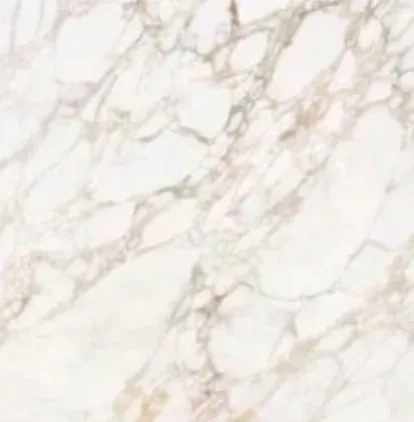
3. Calacatta Gold: Warm, Refined Luxury
Calacatta Gold is known for combining a light background with gray veining and warmer golden, beige or honey-toned movement.
It typically offers more visual drama than quiet Carrara-style stones, while remaining refined enough for sophisticated interiors.
The result can be a balance between luxury and warmth.
Where Does Calacatta Gold Work Best?
Calacatta Gold works beautifully alongside warm architectural finishes such as:
- Brass
- Bronze
- Warm oak
- Cream and beige surfaces
- Light wood
- Matte black fixtures
As a marble bathroom sink, it can provide clear visual richness without necessarily overpowering the room.
Carrara White vs. Calacatta Gold
Carrara White typically creates a quieter atmosphere.
Calacatta Gold tends to create stronger vein movement and warmer visual details.
Carrara could be described as:
Quiet luxury.
Calacatta Gold as:
More expressive luxury.
Character: Warm, elegant, premium
Visual intensity: Medium to high
Best suited to: Luxury bathrooms and refined interiors
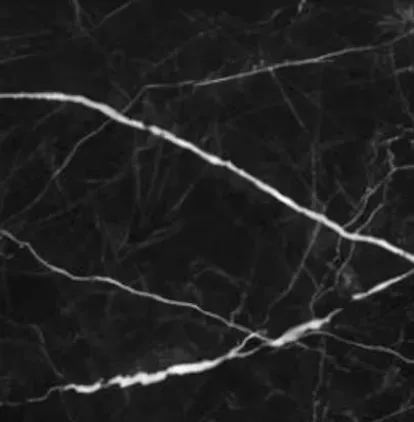
4. Nero Marquina: The Power of Black Marble
Where white marble creates brightness, Nero Marquina introduces contrast.
The stone is associated with a deep black or near-black background crossed by distinctive white veining.
Its visual impact can be immediate.
Even a relatively small object made in black marble can become a strong architectural feature.
A Nero Marquina sink, for example, can become the central focal point in a pale bathroom.
Where Does Nero Marquina Work Best?
It can be particularly effective in:
- Contemporary bathrooms
- Black-and-white interiors
- Luxury hospitality
- Dramatic residential spaces
- Minimal interiors
- High-contrast architectural concepts
Its appearance can also change significantly depending on surrounding metal finishes.
Matte black creates a more monochromatic atmosphere.
Brass or bronze can introduce a warmer and more luxurious contrast.
Character: Strong, modern, sophisticated
Visual intensity: High contrast
Best suited to: Contemporary statement interiors
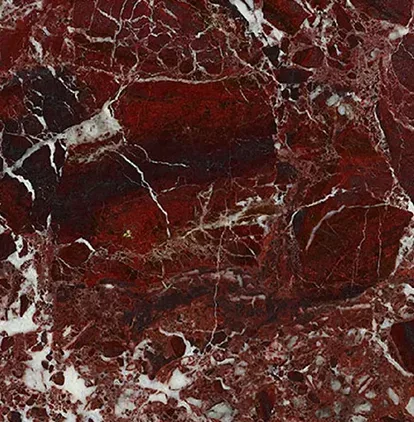
5. Rosso Levanto: Rich Burgundy Natural Stone
Rosso Levanto offers a completely different direction from classic white marble.
Its deep burgundy, red and wine-colored background can be interrupted by lighter veins and natural movement.
The result is rich and dramatic.
Rather than opening a room visually in the way white marble can, Rosso Levanto tends to create depth and atmosphere.
Where Can Rosso Levanto Be Used?
It can be particularly effective for:
- Custom marble sinks
- Console tables
- Side tables
- Fireplace surrounds
- Boutique hotels
- Restaurants
- High-end residential interiors
Rosso Levanto can work beautifully with timber, beige surfaces, cream tones, brass and other warm materials.
Because the stone already carries a strong visual identity, the surrounding palette often benefits from restraint.
Character: Rich, dramatic, warm
Visual intensity: High
Best suited to: Boutique and statement interiors

6. Travertine: Warm, Organic and Architectural
Travertine has a different geological character from marble, but it remains one of the most important materials in natural-stone architecture.
Its beige, cream and earthy palette creates a warm visual language.
Its layered and naturally textured appearance can also feel more tactile than many polished marbles.
Travertine has become particularly relevant to contemporary interiors influenced by Mediterranean, minimalist and Japandi aesthetics.
Why Choose Travertine?
Travertine brings warmth into a space.
It works naturally with materials such as:
- Pale timber
- Linen
- Lime plaster
- Microcement
- Earth-toned surfaces
- Matte metal finishes
A travertine sink does not necessarily rely on dramatic veining to attract attention.
Its identity comes from texture, tonal variation and material depth.
This makes it especially suitable for restrained yet characterful spaces.
Character: Organic, warm, calm
Visual intensity: Low to medium
Best suited to: Minimal and natural architecture
Comparing the Different Types of Marble
Natural stones should not be compared by color alone.
Their broader design character is equally important.
Carrara White
Color: White to pale gray
Veining: Soft gray
Atmosphere: Minimal and timeless
Statement level: Controlled
Calacatta Viola
Color: Pale background with burgundy and violet movement
Veining: Highly expressive
Atmosphere: Artistic and distinctive
Statement level: Very high
Calacatta Gold
Color: White, gray and warm gold or beige movement
Veining: Distinctive
Atmosphere: Warm luxury
Statement level: High
Nero Marquina
Color: Black
Veining: White and high contrast
Atmosphere: Modern and dramatic
Statement level: Very high
Rosso Levanto
Color: Burgundy and deep red
Veining: Light and expressive
Atmosphere: Rich and warm
Statement level: Very high
Travertine
Color: Beige, cream and earth tones
Texture: Layered and organic
Atmosphere: Calm and natural
Statement level: Controlled
What Is the Best Marble for a Bathroom Sink?
There is no universal answer.
The best stone depends on the architecture, the bathroom palette and the role the sink is expected to play.
For a minimalist bathroom
Consider:
Carrara White or travertine.
Both can provide natural character without overwhelming the architecture.
For an elegant luxury bathroom
Calacatta Gold can be an excellent choice.
It works particularly well with brass, bronze and warmer neutral finishes.
For an artistic statement sink
Consider:
Calacatta Viola.
When the veining is positioned carefully, the sink can become almost sculptural.
For a dark contemporary design
Nero Marquina offers powerful contrast.
It can be particularly effective against pale walls and flooring.
For a warm and unusual statement
Rosso Levanto offers a distinctive alternative to conventional white marble.
Why Does Vein Direction Matter?
Choosing the marble variety is only one part of the process.
How the stone is cut can dramatically influence the finished product.
Imagine a block of Calacatta Viola with one particularly expressive vein.
That movement could be positioned intentionally across the front of a sink, through the basin or along the surface of a table.
The same principle applies to other stones.
Vein placement can transform natural variation into a deliberate part of the design.
This is where craftsmanship becomes essential.
A skilled stoneworker does not simply cut dimensions.
They consider which part of the stone should become which part of the object.
Polished or Honed Marble?
Surface finish can dramatically alter the appearance of exactly the same stone.
Polished finish
A polished surface can make colors and veining appear deeper and more pronounced.
It can be particularly effective on expressive materials such as Calacatta Viola, Nero Marquina and Rosso Levanto.
Honed finish
A honed surface produces a softer, more matte and architectural appearance.
It often works beautifully with Carrara White and travertine in contemporary interiors.
The right finish should be selected according to aesthetics, intended use and maintenance expectations.
What Does “Perfect” Mean in Natural Stone?
Natural stone requires a different understanding of perfection.
Veining, color transitions, mineral marks and natural variation are not the same as manufacturing defects.
They are part of the identity of the material.
Two marble sinks made from natural stone are not expected to look perfectly identical.
That difference is part of their value.
Natural stone is not simply manufactured.
It is selected, interpreted and crafted.
Natural Stone Selection for Architects and Interior Designers
In professional projects, stone selection should go beyond choosing from a small sample.
This becomes especially important with strongly veined materials.
A small sample may show the background color but fail to communicate the overall movement of the full block or slab.
Before specifying a natural stone, designers should consider:
Will the stone become a focal point?
What materials surround it?
How large is the final object?
Is vein continuity important?
Will several pieces need to relate visually?
Should the surface feel polished or matte?
For architectural projects, natural stone is often best considered early in the design process rather than treated as a decorative decision at the end.
Which Marble Looks the Most Luxurious?
There is no single “most luxurious” marble.
Luxury is not determined only by price or dramatic veining.
It comes from how successfully the material is used.
A quiet Carrara White sink in a perfectly balanced minimalist bathroom can appear more refined than a highly expressive stone used without consideration for the surrounding space.
Equally, a carefully positioned Calacatta Viola vein can turn a relatively simple basin into an unforgettable statement piece.
True luxury comes from the relationship between:
material + proportion + craftsmanship + detail + context
Choosing Natural Stone with Marble Vertex
At Marble Vertex, natural-stone selection can be approached as part of the design itself rather than simply choosing a color from a catalogue.
Every stone offers a different visual language.
Carrara White provides timeless restraint.
Calacatta Viola introduces artistic movement.
Calacatta Gold brings warm elegance.
Nero Marquina creates powerful contrast.
Rosso Levanto delivers rich depth.
Travertine offers calm, organic texture.
The most important question is therefore not:
“Which marble is the most beautiful?”
The better question is:
“Which marble is right for this design?”
Because in successful natural-stone architecture, the stone does more than cover a surface.
It helps define the identity of the space.
Frequently Asked Questions
What is the difference between Carrara and Calacatta marble?
Carrara varieties are generally associated with softer gray movement and a quieter overall appearance. Calacatta varieties often display stronger, more expressive veining. Natural variation means individual blocks can differ significantly.
Where can Calacatta Viola be used?
Calacatta Viola can be used for marble sinks, tables, consoles, fireplace surrounds, wall features and custom sculptural objects. Its dramatic veining makes it particularly effective for statement pieces.
Can black marble be used in a bathroom?
Yes. Black natural stones such as Nero Marquina can create sophisticated, high-contrast bathrooms, particularly when paired with lighter surfaces or carefully selected metal fixtures.
Is travertine a type of marble?
Travertine and marble are both natural stones but form through different geological processes. Both are widely used in architecture, interiors and custom stone products.
Which stone is best for a marble sink?
There is no single best material for every project. Design, color, veining, finish, maintenance expectations and architectural context should all be considered.
Does every piece of natural marble look the same?
No. Color distribution, veining and mineral movement vary naturally between blocks. This variation is one of the defining characteristics of genuine natural stone.
Let the Stone Define the Character of the Design
Carrara White.
Calacatta Viola.
Calacatta Gold.
Nero Marquina.
Rosso Levanto.
Travertine.
Each tells a different story.
Some are quiet.
Some are dramatic.
Some are warm, architectural or artistic.
That is precisely what makes natural stone so compelling.
There is no universal stone for every interior.
The right material depends on the story the architecture is intended to tell.
Explore the Marble Vertex natural-stone collection and discover marble sinks, tables, bathtubs and custom-made pieces crafted around the individual character of natural stone.