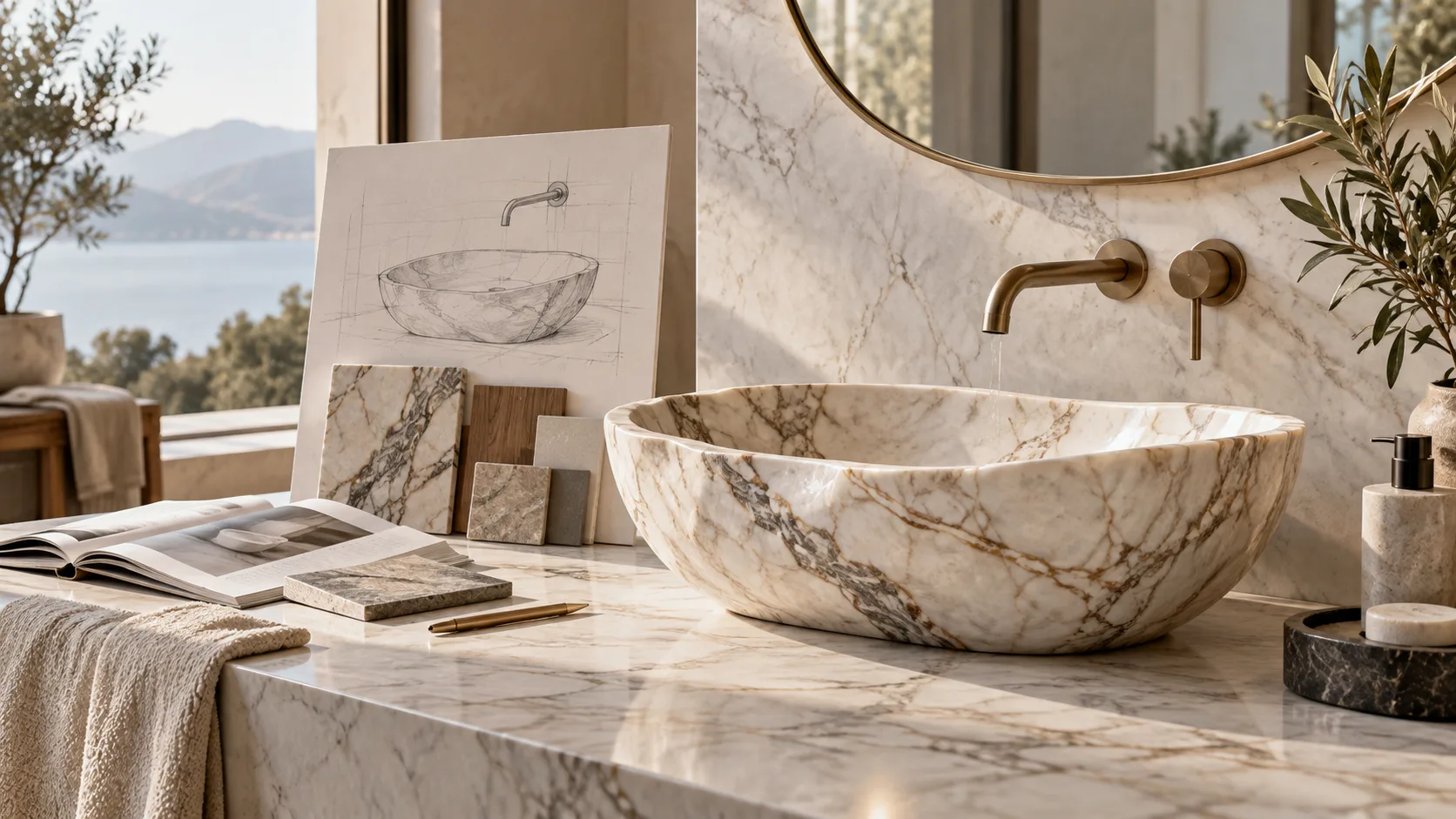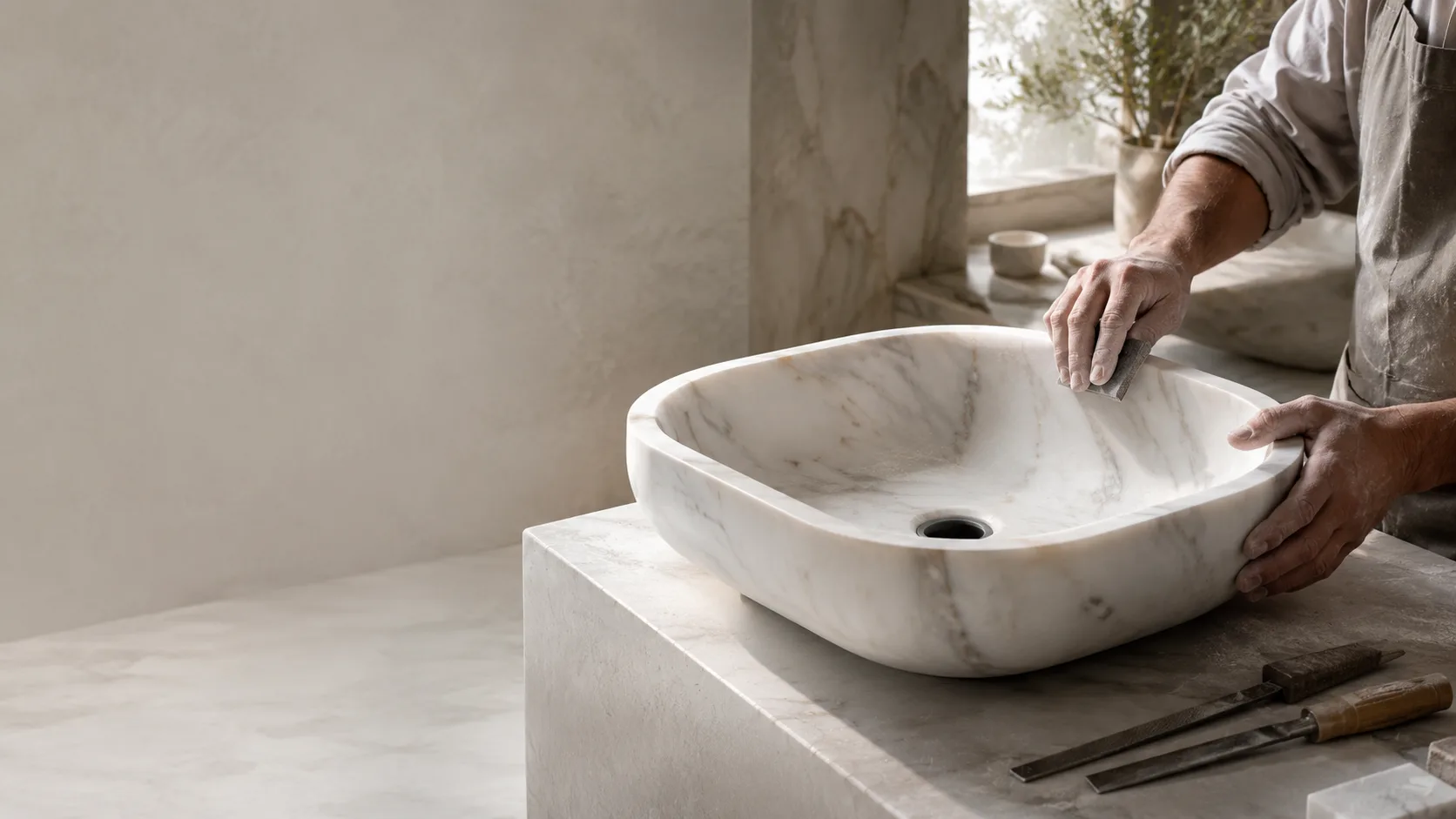

Discover the geological story, varieties and timeless appeal of this unique natural stone formed over millions of years.
For thousands of years, marble has been a symbol of humanity's pursuit of beauty and durability. From palaces to sculptures, bathrooms to kitchen countertops, this natural stone remains one of the most powerful expressions of luxury. But what is natural marble, how does it form, and why is it so valuable?
What Is Marble?
Marble is a metamorphic rock formed when carbonate rocks such as limestone recrystallize under high heat and pressure. During this process, calcite crystals grow and interlock, creating marble's signature smooth, luminous surface.
Mineral impurities give each block its unique color and veining, which is why no two pieces of marble are exactly alike.
How Does Marble Form?
The formation of marble is a geological journey spanning millions of years, in three main stages:
Sedimentation
Calcium-rich shells and microorganism remains accumulate on the seabed and compress into limestone over time.
Metamorphism
Buried limestone is exposed to intense heat and pressure, reorganizing its calcite crystals and transforming the rock into marble.
Surfacing
Millions of years later, tectonic movements bring these marble masses near the surface.
Types of Marble
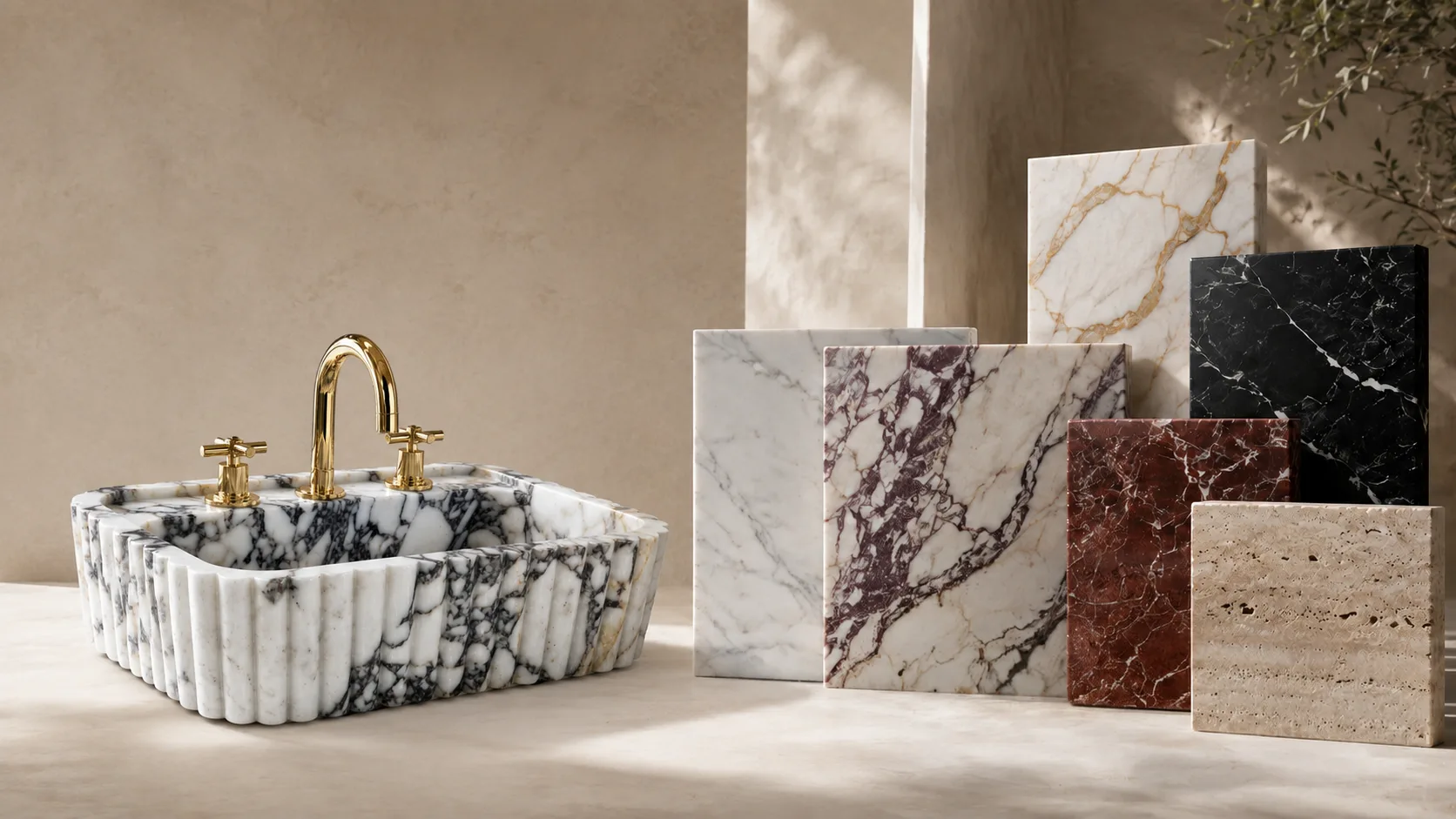
There are hundreds of marble varieties worldwide, each offering a distinct character.
White Marbles
A symbol of purity. Carrara is known for fine grey veins, while Calacatta features dramatic gold-grey veining. Turkey's renowned Afyon White marble is among the most precious of this group.
Advantages of Marble
Bringing a pattern nature wove over millions of years into your home — that is the true luxury of marble.
Conclusion
Natural marble is not merely a building material but a living texture that carries a million-year story into your home.